English| EUR
Suggested for you
More currencies
Choose a language
Port Stephens' sand dunes draw thousands of first-time riders each year, and the most common question is whether sandboarding requires prior board-sport experience. The short answer: it doesn't. This guide explains the real difficulty level, what makes sand forgiving compared to snow, and how long it takes most people to ride confidently down a dune.
Quick answer
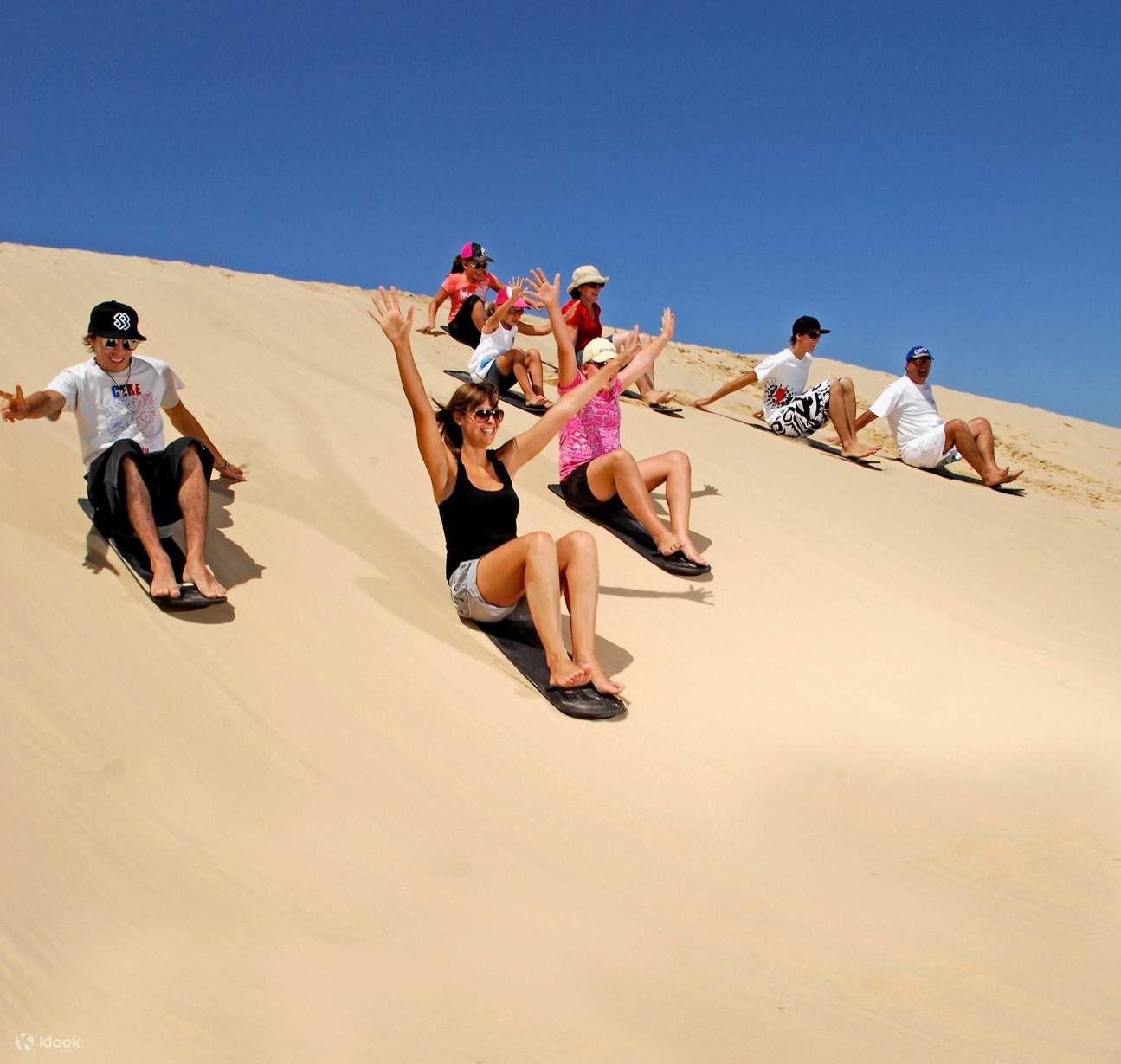
Sandboarding is not difficult for most beginners. The majority of first-time riders stand and descend a dune within 15 to 20 minutes of instruction. Sand provides a softer, slower surface than snow, which reduces both speed and impact from falls. Port Stephens' guided experiences include board setup, stance coaching, and dune selection matched to skill level, making the learning curve gentle even for those who have never tried a board sport.
The Stockton Sand Dunes rise up to 30 metres above sea level, yet their gradient and surface texture make them one of the most beginner-friendly sandboarding environments in Australia. Unlike snowboarding, where edge control and speed management demand hours of practice, sandboarding on fine coastal sand naturally limits velocity. Friction does most of the work. A rider can lean back slightly, keep their knees bent, and descend in a controlled glide without carving or edging technique. Is sandboarding difficult compared to other board sports? The consensus among instructors is no. Snow requires precise weight shifts to control metal edges on a hard, fast surface. Sand absorbs mistakes. When a rider loses balance, they step off or sit down onto a yielding surface rather than tumbling across ice. Most adults stand and complete their first run within twenty minutes. Children as young as six ride successfully on sit-down boards, which require even less balance. The learning curve flattens quickly because the environment forgives experimentation. Port Stephens operators match dune difficulty to rider confidence. Beginners start on slopes with gentler pitch and shorter run-out, progressing to steeper faces only after several successful descents. The sand consistency matters: Stockton's fine quartz grains compress evenly under the board, preventing the catch-and-tumble snags common on coarser desert sand. Guides watch for stance errors—locked knees, forward-leaning posture—and correct them before they become habits. Most sessions allocate the first thirty minutes to instruction and the remainder to independent riding, a rhythm that reflects how quickly competence develops. Physical demand is moderate. Climbing back up a dune after each run taxes the legs more than the descent itself, but shuttle services handle the longest ascents. Riders spend energy on the hike, not the technique. Those with knee or ankle concerns should mention them during the safety briefing; guides adjust board setup and recommend dune angles accordingly. Sand in the eyes and sunburn are more common complaints than difficulty mastering the skill. The ride itself, once the stance is dialled in, becomes intuitive within the first hour.
“Sand absorbs mistakes in a way snow never does, which is why most first-time riders are descending confidently within their first session.”
The best arrival window is 09:30–15:30 to avoid peak midday heat, which significantly increases the physical exertion required for sandboarding. Visiting during cooler parts of the day makes the climb up the dunes more manageable.
Mild 20°C–25°C temperatures. Ideal conditions for climbing and boarding without excessive heat exhaustion.
Hot, often exceeding 30°C. High heat significantly increases physical difficulty and fatigue levels.
Cool 10°C–18°C temperatures. Minimal heat stress, though wind speeds can occasionally impact the surface conditions.
—. Cooler temperatures and smaller groups allow for a more relaxed pace and easier dune access.
Verdict: For the most manageable experience, aim for weekday mornings during the milder months of April or October.
The sandboarding safari follows a structured sequence: a 4WD transfer onto the dunes, a guided climb to the launch point, and repeated runs down the sand slope. The entire experience lasts around 90 minutes from shuttle departure to return.
Shuttles depart from the Lower Car Park on James Paterson Street throughout operating hours. Arrive during the 09:30–15:30 window to ensure you catch a departure with enough daylight remaining.
The 4WD handles the soft sand approach, covering roughly two kilometres to the sandboarding zone. No walking or effort required during this stage—the vehicle does the work.
This is where the physical effort concentrates: a 20–30 metre ascent up loose sand, repeated before each run. Pace yourself, pause halfway if needed, and use the compacted tracks other participants leave behind.
Each descent lasts 10–15 seconds; most beginners complete four to six runs. The board is stable and forgiving, but controlling speed on the first attempt takes a moment to learn.
Once your session concludes, the shuttle retraces the route back to the starting point. No additional walking or climbing required after your final run.
Sandboarding operations at Port Stephens are open daily throughout the week.
The sandboarding site is located at the Stockton Sand Dunes in Anna Bay, Port Stephens. Visitors access the dunes via a 4WD transfer service departing from the designated meeting point.
Nelson Bay Road to James Paterson Street
Port Stephens Coaches to Anna Bay
Head to the Lower Car Park at James Paterson Street, Anna Bay, NSW 2316 to meet your 4WD transfer. We recommend arriving within the 09:30–15:30 window to avoid peak heat and ensure your departure.
Sandboarding becomes significantly easier when you bring the right gear and prepare for the desert environment.
Everything you need to know about is sandboarding difficult
Many visitors find that is sandboarding difficult is a common concern, but the activity is designed to be accessible for most fitness levels. Instructors provide guidance on how to sit or stand on the board to manage your speed effectively.
Participating in a Port Stephens sandboarding tour requires moderate physical exertion, primarily when climbing back up the dunes after a descent. You can pace yourself throughout your session to ensure the experience remains enjoyable.
If you are wondering is sandboarding difficult compared to winter sports, you may be surprised by how intuitive the process feels on sand. Most riders master the basics of steering and braking within a few short runs.
While there are no strict age limits, participants should be comfortable navigating steep gradients and loose terrain independently. Parents should assess their child's ability to follow safety instructions before booking a sandboarding safari.
The 4WD transfer to the Stockton Bight dunes is included with your entry and generally takes about 10 minutes to reach the sand. This efficient transport ensures you spend more time on the dunes and less time navigating the environment.
While you might ask is sandboarding difficult in heat, we recommend visiting during the best arrival window of 09:30–15:30 to avoid peak temperatures. Planning your session early or late in the day helps maintain comfort while exploring these massive coastal landmarks.